
Learning Objectives:
- Develop a personal view of content curation concept
- Identify the difference between authoring, collecting, and curating activities on the web
- Compare and contrast different positions involved in content curation: curator vs. creator concept
- Construct a curated resource using Wakelet: https://wakelet.com
- Assess Wakelet curation artifacts of other students
- Discuss which roles are more valuable: curator or content creator (Understand)
Introduction:
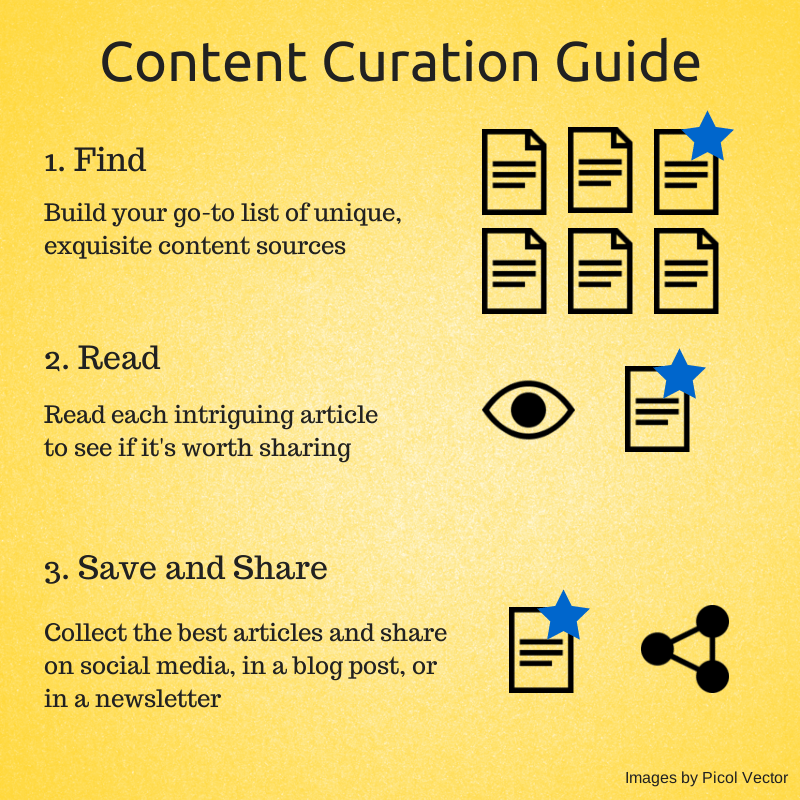
The concept of content curation is not new. Since the beginning of the Internet, everyone has done a bit of it. It is impossible not to since once you connect to the Internet you are bombarded with information! The very essence of the Information Super Highway can become a bit overwhelming to an aimless wanderer unless you use filtering or content curation techniques.
In Ch 6 of Cognitive Surplus Shirky talks about “trusted” sources of information and communities. Part of this “trust” is established by a successful content curation and filtering of irrelevant information.
During this Unit, you content-curate also by using social bookmarking and RSS feeds. Through social bookmarking and RSS feeds you will find and mark the content you would like to receive from others and even organize this content around a particular topic by using tagging, lists, and categories. However, that still leaves a lot of content in other places to go through, which you can explore on your own.
So, in Part I of this Unit once you have found the content you are interested in, the next step would be to present this information to your network in a meaningful, relevant to a specific topic way. This is where content curation software, like Wakelet: https://wakelet.com, which we will explore first comes handy.