
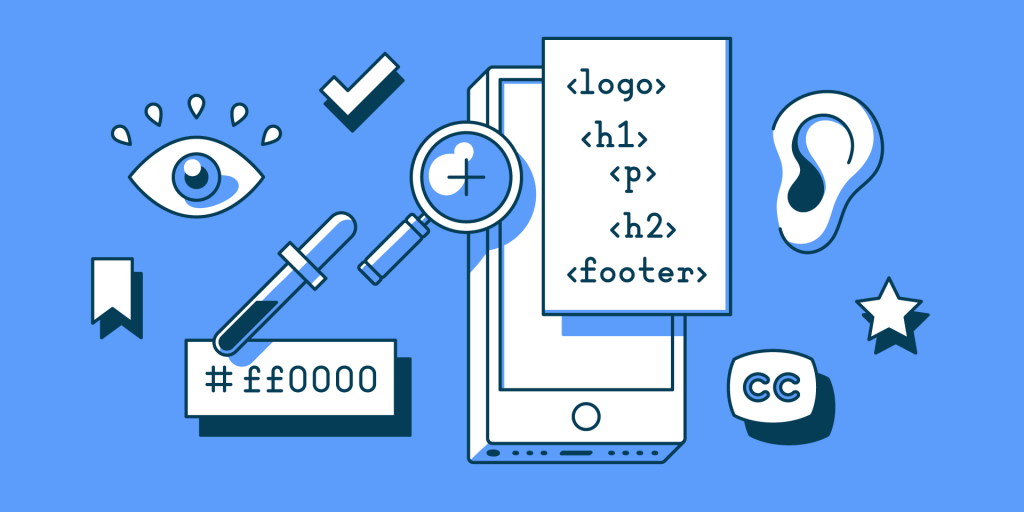
The main goal of this lesson is to foster awareness of web accessibility and why it is important. The secondary goal is to give you an overview of web accessibility standards (WCAG 2.0) and teach you how to make your digital content accessible.
Learning Objectives:
- recognize what web accessibility is and where it fits in a broader concept of ADA compliance
- assess whether your digital artifact meets Web Content Accessibility Guidelines (WCAG) 2.0 using reference tool for WCAG 2.0 requirements
- recognize how you can make your own portfolio site accessible
Why the web accessibility?
According to Wikipedia, “web accessibility refers to the inclusive practice of removing barriers that prevent interaction with, or access to websites, by people with disabilities. When sites are correctly designed, developed and edited, all users have equal access to information and functionality.” The important words in this definition are “equal access.” The Americans with Disabilities Act (ADA) Standards for Accessible Design which was introduced in September 2010 state that all electronic and information technology must be accessible to people with disabilities. So, on a fundamental level, conforming to the web accessibility best practices is complying with the ADA standards. Even though the ADA compliance law applies to commercial and public entities that have “places of public accommodation” (which includes educational institutions), practicing web accessibility on a personal level is also a matter of good digital citizenship.
The web even today, when a lot of online technologies have built-in accessibility features, is not fully obliging to many people who have visual and audio impairments and rely on assistive technologies to help with navigation through digital content. There are two important standards that affect web accessibility: Section 508 compliance and WCAG 2.0 compliance. In this lesson, we will concentrate on WCAG 2.0 standards.